Overview
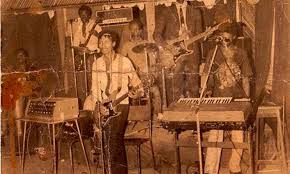
The period between 1970 and 1977 represents one of the most transformative eras in Nigerian music history. Emerging in the aftermath of the Nigerian Civil War, Afro-Funk became the dominant urban sound of a generation seeking renewal, movement, and modern identity.
Characterised by electrified instrumentation, groove-based rhythm structures, and experimentation influenced by global funk and soul traditions, the Afro-Funk era marked Nigeria’s decisive transition from orchestral highlife dominance toward modern popular music.
Historical Context: After the War
The end of the Civil War in 1970 produced profound cultural consequences. A youthful population confronted reconstruction with energy rather than restraint. Music venues reopened, nightlife expanded, and musicians began exploring new sonic possibilities.
Urban centres such as Lagos, Enugu, Aba, and Port Harcourt became hubs of experimentation where young bands fused indigenous rhythm traditions with imported musical influences.
Afro-Funk emerged not as imitation, but adaptation — Nigerian musicians translating global sounds into local cultural expression.
The Sound of Afro-Funk
Afro-Funk differed fundamentally from earlier highlife traditions.
Typical characteristics included:
- Electric lead and rhythm guitars
- Prominent funk basslines
- Drum-driven grooves
- Horn accents rather than orchestral dominance
- Extended instrumental passages
- Dance-centred arrangements
Performance energy became central. Bands prioritised groove, movement, and audience interaction over formal ballroom precision.
The Rise of the Modern Nigerian Band
The Afro-Funk era produced a new type of Nigerian band — smaller, electrified, mobile, and youth-oriented.
Groups such as The Funkees, Aktion Funk, The Wings Of Aba, The Apostles, Ofege, BLO exemplified this transformation, blending Afro-rock textures with funk rhythms and psychedelic experimentation. Across the country, bands increasingly adopted amplified instruments and stage aesthetics influenced by global pop culture.
Musicians were no longer confined to social clubs and ceremonial settings; they became urban cultural figures.
Global Influences, Local Identity
Nigerian musicians absorbed influences from:
- American funk and soul
- Rock and psychedelic music
- Caribbean rhythmic traditions
- Jazz improvisation
Yet Afro-Funk retained unmistakably Nigerian qualities through language, rhythmic phrasing, and performance culture.
Rather than replacing tradition, Afro-Funk expanded it.
Industry Expansion and the Oil Boom
The festival brought artists from across Africa and the global Black diaspora to Lagos, positioning Nigeria as a cultural centre of Black artistic expression.
Nigeria’s oil boom of the early 1970s indirectly fuelled musical growth.
Increased economic activity supported:
- Importation of modern instruments
- Expansion of recording studios
- Growth of independent record labels
- Larger entertainment venues
Music became both a cultural expression and a commercial enterprise.
Diaspora Movement and International Exposure
By the mid-1970s, several Nigerian bands sought opportunities abroad, particularly in the United Kingdom. Migration exposed musicians to international audiences but also altered domestic momentum.
Bands operating outside Nigeria often faced changing musical tastes at home, contributing to later fragmentation upon return.
FESTAC ’77: Cultural Apex of the Era
The Afro-Funk period reached symbolic culmination with the Second World Black and African Festival of Arts and Culture (FESTAC ’77).
For Nigerian musicians, FESTAC represented validation — confirmation that local musical experimentation formed part of a broader global cultural movement.
Transition Toward Disco and Pop
Ironically, the success of Afro-Funk also prepared the ground for its transformation.
By the late 1970s:
- Disco rhythms gained popularity
- Studio production became tighter
- Song structures shortened
- Solo artistes gained prominence
The heavy band format gradually gave way to the structured pop sound that would dominate the early 1980s.
Artists such as Chris Okotie would soon embody this next phase.
Historical Significance
The Afro-Funk era represents:
- Nigeria’s electrified musical awakening
- Post-war youth cultural assertion
- The bridge between highlife and modern pop
- The foundation of later disco and Afrobeats evolution
It was the moment Nigerian music embraced amplification, experimentation, and global dialogue while retaining local identity.
Archival Positioning
Between independence optimism and 1980s pop modernity, Afro-Funk stands as the hinge of Nigerian musical transformation.
Without the experimentation of 1970–1977, the later emergence of Nigerian disco, structured pop, and contemporary global Afrobeats would not have been possible.