Overview
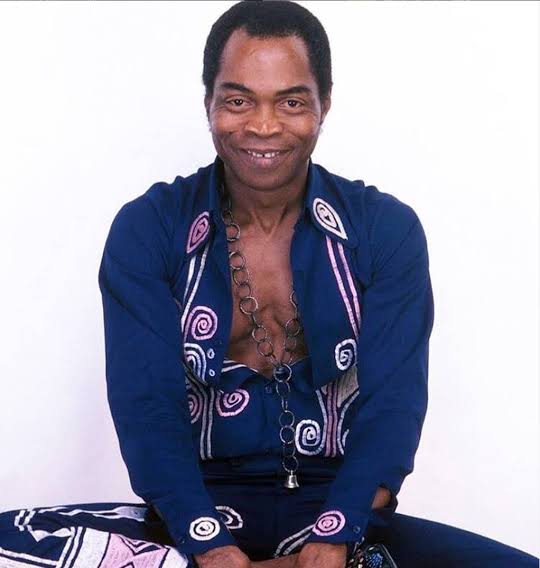
Few figures have shaped Nigerian music as profoundly as Fela Anikulapo Kuti. During the turbulent cultural and political climate of the late 1960s and 1970s, Fela developed Afrobeat, a genre that fused highlife, jazz, funk, and traditional African rhythms into a powerful musical and political force.
Afrobeat emerged alongside the broader Afro-Funk movement that transformed Nigerian music after the Civil War, yet it quickly developed its own identity characterised by extended grooves, complex horn arrangements, and fearless social commentary.
By the mid-1970s, Fela and Afrobeat had become central to Nigeria’s musical identity and one of the most recognisable African sounds worldwide.
Highlife Roots
Before Afrobeat took shape, Fela’s early musical training was grounded in the highlife tradition that dominated Nigerian popular music in the 1950s and 1960s.
Highlife orchestras relied on:
- horn-driven arrangements
- guitar-based rhythms
- dance-band performance culture
These elements later became part of Afrobeat’s structural foundation. However, Fela’s exposure to jazz, soul, and Black political consciousness during his travels abroad radically transformed his artistic direction.
Birth of Afrobeat
By the early 1970s, Fela had refined a distinctive sound that departed from both traditional highlife and the emerging Afro-Funk band style.
Afrobeat combined:
- hypnotic funk basslines
- powerful horn sections
- jazz improvisation
- African percussion patterns
- politically charged lyrics
Songs often stretched beyond ten minutes, evolving gradually through instrumental passages before vocals emerged.
This format turned music into both performance and narrative.
Africa ’70 and the Shrine
Central to Fela’s musical vision was his band Africa ’70. and Later Egypt 80, a large ensemble of disciplined instrumentalists capable of sustaining complex rhythmic arrangements for extended performances.
Their primary venue, the Shrine in Lagos, became an important cultural space where music, political discussion, and artistic experimentation intersected.
Live performances were essential to Afrobeat’s development. Concerts frequently extended into long improvisational sessions where groove, rhythm, and message merged into a powerful collective experience.
Music as Political Expression
Unlike most popular music of the era, Afrobeat openly addressed political realities.
Through songs and performances, Fela confronted themes such as:
- government corruption
- military rule
- colonial legacy
- African cultural identity
International Collaborations
Afrobeat’s global resonance was strengthened by collaborations with musicians outside Nigeria.
Fela’s association with Ginger Baker, legendary British drummer of the rock band Cream, began during his time in London and continued through recordings in the early 1970s. This musical relationship was bouyed by Ginger Baker’s residency in Lagos, Nigeria in the late 70’s where he set up ARC recording studio and record label.
Another significant collaboration came with American jazz-funk vibraphonist Roy Ayers, resulting in the album Music of Many Colours. The project demonstrated Afrobeat’s ability to engage directly with the Black Atlantic musical conversation.
These collaborations expanded Afrobeat’s international reach and reinforced its status as a globally relevant African sound.is approach transformed Afrobeat from entertainment into a vehicle for political commentary and cultural resistance.
Afrobeat Within the Afro-Funk Era
Although Afrobeat developed alongside Nigeria’s broader Afro-Funk movement, the two represented different musical philosophies.
Afro-Funk bands such as The Funkees focused primarily on dance-floor energy and electrified experimentation.
Afrobeat, by contrast, evolved into a more orchestral and ideologically driven form, combining music with social critique and cultural symbolism.
Together, these movements defined the sonic landscape of Nigerian urban music throughout the 1970s.
Global Influence of Afrobeat
Although Afrobeat originated in Nigeria, its influence eventually spread far beyond the country’s borders. Musicians across Europe, the United States, and other parts of Africa began adopting Afrobeat’s rhythmic structure, horn arrangements, and extended groove format.
Today, numerous Afrobeat-inspired bands operate internationally, demonstrating how the genre has become part of the global vocabulary of contemporary music.
Afrobeat’s rhythmic architecture has also influenced modern hip-hop and electronic music. Elements of Fela’s recordings have been sampled or referenced by artists across multiple genres, including major figures in American hip-hop such as Jay-Z. Through these reinterpretations, Afrobeat continues to circulate within global popular music culture.
Why Afrobeat Did Not Dominate Nigerian Pop
Despite its global influence, Afrobeat did not become the dominant commercial genre within Nigeria itself.
Several factors contributed to this:
- Afrobeat compositions were often long and complex, making them less suited to commercial radio formats.
- The genre was closely associated with Fela’s political persona and performance structure.
- Nigeria’s music industry gradually shifted toward shorter, more commercially oriented pop recordings during the late 1970s and 1980s.
As a result, Afrobeat remained a specialised artistic tradition rather than a mainstream commercial format.
The Afrobeat Continuum
After Fela’s era, the genre continued through a smaller but dedicated group of musicians who preserved its musical philosophy.
Artists such as Femi Kuti, Seun Kuti, Dede Mabiaku, and Lagbaja maintained elements of Afrobeat within their own musical projects, ensuring that the genre remained present in Nigerian musical discourse.
While Nigerian pop evolved in other directions, Afrobeat retained a powerful symbolic position as one of the country’s most distinctive artistic exports.
Global Recognition and Legacy
Fela’s influence continued long after the Afro-Funk era.
Afrobeat has since inspired generations of musicians across Africa and the diaspora. His work remains a cornerstone of modern African musical identity.
Decades after his passing, global recognition continues to grow. In 2025, his landmark album Zombie was inducted into the GRAMMY Hall of Fame, and in 2026 Fela received the Recording Academy’s Lifetime Achievement Award posthumously—recognition of his lasting impact on world music.