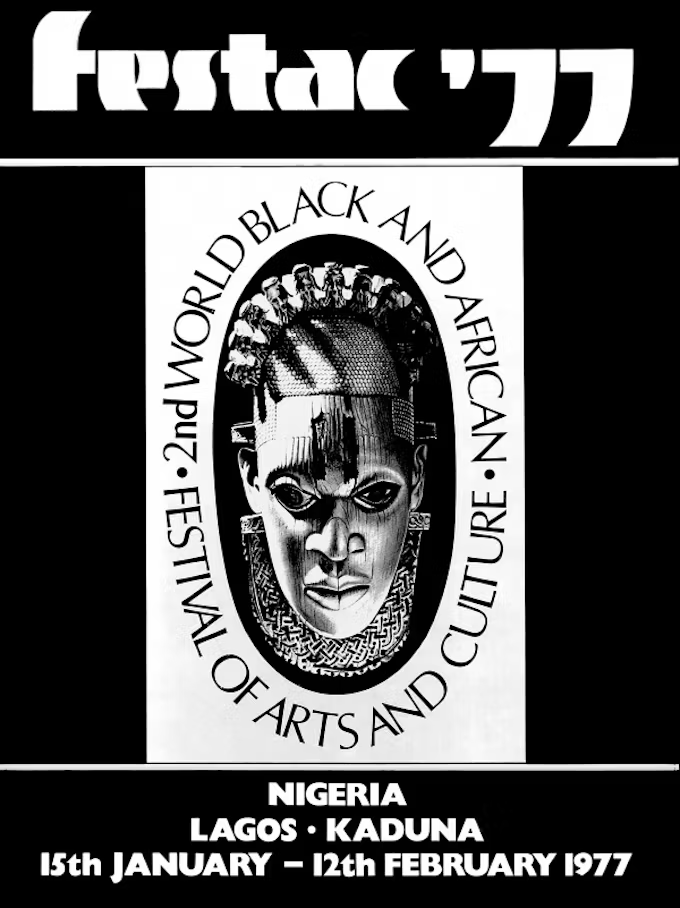
Overview
In 1977, Nigeria hosted one of the most ambitious cultural gatherings ever organised on the African continent: the Second World Black and African Festival of Arts and Culture, popularly known as FESTAC ’77.
The festival brought together thousands of artists, musicians, writers, dancers, and scholars from across Africa and the global Black diaspora. For Nigeria, FESTAC ’77 represented a powerful statement of cultural confidence and artistic leadership in the post-colonial era.
Within Nigerian music history, the event stands as the symbolic culmination of the country’s creative explosion during the 1970s.
Historical Context
The decade leading up to FESTAC ’77 was one of the most transformative periods in Nigerian music.
Following the Civil War, the country experienced a surge in cultural creativity driven by youth culture, urban nightlife, and growing access to modern musical instruments and recording technology.
Several musical currents defined this period:
- The enduring influence of highlife orchestras
- The electrified Afro-Funk bands emerging from the early 1970s
- The revolutionary Afrobeat sound pioneered by Fela Anikulapo Kuti
By the mid-1970s, Nigeria had developed one of the most vibrant popular music environments on the African continent.
The Festival
Held in Lagos over several weeks in early 1977, FESTAC ’77 attracted participants from more than fifty countries across Africa and the Black diaspora.
At the centre of the event stood the newly constructed National Theatre in Lagos, built specifically to host the festival’s cultural programmes.
The festival featured:
- musical performances
- dance and theatrical productions
- art exhibitions
- literary discussions
- film screenings
- scholarly conferences
For many participants, it was the first opportunity to witness such a broad display of African and diasporic cultural expression in one place.
Music at FESTAC
Music played a central role in the festival’s programme.
Traditional ensembles, modern bands, and contemporary performers shared the stage, illustrating the diversity of African musical traditions.
For Nigerian musicians, the festival provided an unprecedented opportunity to present their work within a global Black cultural context. Highlife, Afro-Funk, and Afrobeat were no longer simply national musical forms — they were part of a wider conversation about African identity and artistic modernity.
Nigeria’s Cultural Assertion
Beyond its artistic significance, FESTAC ’77 was also a statement of national ambition.
Nigeria, buoyed by the economic optimism of the oil boom, sought to position itself as a cultural and intellectual centre for Africa and the diaspora. Hosting the festival allowed the country to demonstrate both its organisational capacity and its cultural vitality.
For Lagos, the event reinforced its status as one of Africa’s major cultural capitals.
The End of the Band Era
While FESTAC ’77 celebrated the vitality of African music, it also arrived at a moment of transition within Nigeria’s music industry.
By the late 1970s:
- large live bands were beginning to decline
- recording studios were becoming more central to music production
- solo artists were gaining prominence
- disco and pop influences were entering Nigerian music
The vibrant band-driven energy of the Afro-Funk era was gradually giving way to a new phase of studio-based pop music.
Historical Significance
Today, FESTAC ’77 remains one of the most important cultural gatherings ever held in Africa.
For Nigerian music, the festival represents:
- The global recognition of the country’s musical creativity
- The culmination of the Afro-Funk and Afrobeat explosion of the 1970s
- The moment when Nigerian music connected visibly with the wider Black world
It stands as both a celebration of the decade’s artistic achievements and a marker of the transition toward the new musical directions that would define the 1980s.
Archival Positioning
Within the Nigerian Music Digital Archive, FESTAC ’77 serves as the closing chapter of the 1970s narrative.
The period that followed would usher in new sounds — disco, Nigerian pop, and eventually reggae — that reshaped the country’s musical landscape in the decades ahead.