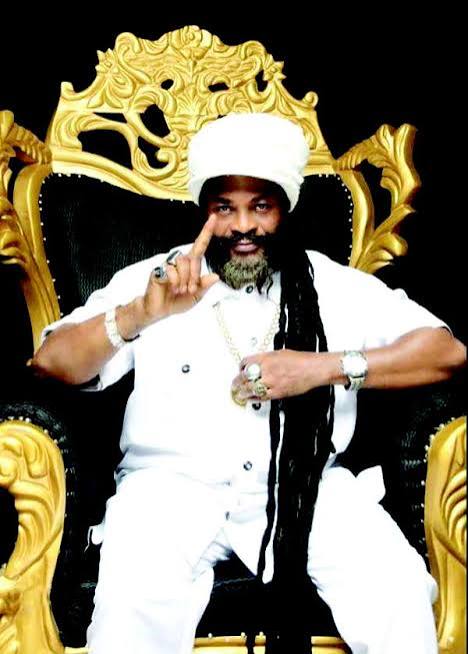
1. Overview
- Full Name / Pseudonym: Andy Shurman
- Place of Origin: Isiala Ngwa South LGA, Abia State, Nigeria
- Primary Active Era: Late 1980s – Early 1990s
- Associated Genres: Classic Nigerian Reggae / Roots Reggae / Protest Music
- Key Academic Credentials: B.Sc. in Philosophy (University of Jos), Master’s Degree in Political Science
- Primary Record Label: Tabansi Records Ltd. [1, 2, 3, 4, 5]
2. Biography & Historical Context
Andy Shurman emerged as a profound lyrical architect during the golden era of the Nigerian Reggae revolution of the late 1980s. This socio-political movement saw reggae musicians rise as cultural prophets, speaking raw truth to military governance. Standing alongside genre giants like Majek Fashek, Ras Kimono, The Mandators, Orits Wiliki, and Peterside Ottong, Shurman carved out a distinct identity as the self-acclaimed “Advocate for the Masses.” [1, 2, 3, 4, 5]
Unlike many contemporary street acts of the period, Shurman’s creative foundation was deeply rooted in academic philosophy and political science. This intellectual background injected a heavy dose of structural critique, generational prophecy, and anti-oppression messaging directly into his songcraft. [1, 2, 3]
3. Breakthrough: The 1989 Sonic Blueprint
In 1989, Andy Shurman released his explosive debut studio album, ‘Save the Masses’, via the iconic Tabansi Records imprint. The album became an immediate nationwide commercial success, dominating radio airwaves and tape decks across West Africa. [1, 3, 4]
The undisputed anchor of the project was the smash-hit track “Kinky Reggaeman.” The song combined infectious bass grooves with a localised, relatable reggae swing that successfully bridges traditional African rhythmic sensibilities with roots reggae patterns. [1, 2, 3, 4]
‘Save the Masses’ (1989) Official Tracklist:
- Save The Masses
- Kinky Reggaeman
- Tabefaction (often stylised as Tabef Action)
- Oladi
- Judgment Day (Judgement Days)
- Let Them Rise
- My Creator
- No Train
- Fight Them Back Lord [1, 2]
4. The Silent Era: Leaving When the Ovation Was Loudest
At the absolute zenith of his stardom and commercial viability, Andy Shurman made the abrupt decision to exit the Nigerian music circuit. He became one of the culture’s most elusive mysteries, completely dropping out of the domestic public eye. [1]
For nearly a decade, Shurman lived as a global sojourner, travelling, performing, and studying across the United States, Canada, and Germany, eventually securing dual citizenship. During this extended diaspora period, his original 1989 tracks became legendary, highly sought-after collector’s items for retro vinyl enthusiasts worldwide. [1, 2, 3, 4]
5. Artistic Philosophy & Legacy Quotes
Shurman’s approach to the music business was defined by a strictly non-violent, politically explosive stance. He famously outlined his artistic mission statement during his career profile interviews: [1, 2]
“I have said it from the outset that I would always speak the truth. I have neither gun nor a knife. My music is my weapon. Through my music, I will fight for freedom. I will fight for what is right as a prophet of this generation.” [1]
6. The Modern Era: Return of the Prophet
Following a long underground absence, Andy Shurman returned to Nigeria to establish modern creative footholds. Shurman stepped into administrative and corporate operations, serving as the Chairman of Shuaninii Music and Film Entertainment Ltd., alongside distinct energy-sector ventures. [1, 2]
To revive the conscious foundations of indigenous roots reggae, Shurman collaborated with foreign imprint Draft Music to design his official return projects, spearheaded by the singles “Stop the Oppressors” and “Another Moses.” [1, 2]
Today, his vintage 1989 catalog stands preserved within the archives as a masterclass in conscious political engineering during Nigeria’s turbulent late-20th-century transition era. [, 2]