An Overview of Nigerian Music Since Independence (1960)
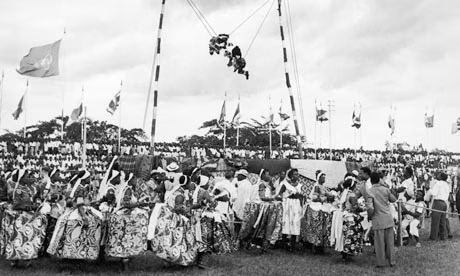
When Nigeria gained independence in 1960, music stood at the centre of national expression. It was a period of optimism, cultural pride, and creative confidence. Nigerian musicians were no longer only entertainers; they became storytellers, commentators, and custodians of identity.
From that moment onward, Nigerian music evolved alongside the nation itself — responding to political change, economic shifts, urbanisation, migration, and global influence.
The Post-Independence Sound: Highlife and National Identity (1960s)
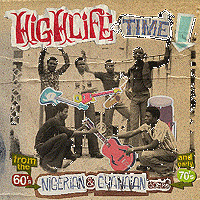
In the years following independence, highlife music dominated Nigeria’s soundscape. Originating earlier in coastal West Africa, highlife became the soundtrack of a new nation, elegant, socially conscious, and proudly African.
Bands blended traditional rhythms with brass instruments, guitars, and Western harmonies. Lyrics reflected themes of unity, celebration, morality, and everyday life. Music thrived in dance halls, hotels, radio stations, and social clubs, especially in urban centres such as Lagos, Ibadan, and Onitsha.
Highlife helped define what modern Nigerian music could be: rooted in tradition, yet outward-looking.
The 1970s: Afrobeat, Funk, and Musical Resistance
The 1970s marked a turning point. As military rule, oil wealth, and social tension reshaped Nigeria, music became more confrontational and expressive.
Afrobeat emerged as a powerful force, a fusion of traditional rhythms, jazz, funk, and sharp political commentary. Long-form compositions, heavy percussion, and call-and-response vocals created music that was as ideological as it was rhythmic.
Alongside Afrobeat, Nigerian musicians experimented with soul, funk, rock, and psychedelic sounds. Studios expanded, vinyl production increased, and Nigerian music began to attract international attention.
This era cemented music as a tool for protest, identity, and social reflection
The 1980s: Reggae, Pop, and the Voice of the People
Economic hardship and political uncertainty in the 1980s gave rise to reggae and conscious music in Nigeria. Influenced by global reggae movements but grounded in local realities, Nigerian reggae addressed injustice, poverty, spirituality, and African unity.
At the same time, Nigerian pop, disco, and boogie flourished. Drum machines, synthesisers, and studio experimentation reshaped sound production. Music became more dance-oriented, while still carrying strong lyrical messages.
Cassette culture expanded access to music, allowing sounds to travel beyond major cities into homes, buses, and street markets.
The 1990s: Transition, Hip-Hop, and New Urban Voices
The 1990s were a period of transition. As Nigeria navigated political change and increased global connectivity, a younger generation of musicians began blending Nigerian rhythms with hip-hop, R&B, and contemporary pop.
English, Nigerian Pidgin, and indigenous languages mixed freely. Themes shifted toward urban life, aspiration, identity, and youth expression. While live bands declined, studio-based production and collaborations increased.
This era laid the groundwork for what would later become modern Nigerian pop music.
The 2000s to Present: Global Afrobeats
From the early 2000s onward, Nigerian music entered a new global phase. Digital production, internet distribution, and diaspora networks transformed reach and visibility.
Afrobeats — a broad, evolving pop sound drawing from earlier Nigerian genres gained international prominence. Nigerian artistes began topping global charts, collaborating across continents, and redefining Africa’s place in global popular culture.
Yet beneath this global success lies a long musical lineage built on decades of experimentation, resistance, celebration, and cultural memory.
Looking Back to Move Forward
Understanding Nigerian music since independence is not simply about genres or timelines. It is about recognising how music has consistently reflected the nation’s journey, its struggles, triumphs, contradictions, and creativity.
This archive begins with history because preservation must start with context. To know where Nigerian music is going, we must first understand where it has been.