Origins, Rivalries, Regional Dialects, Diffusion, and Revival
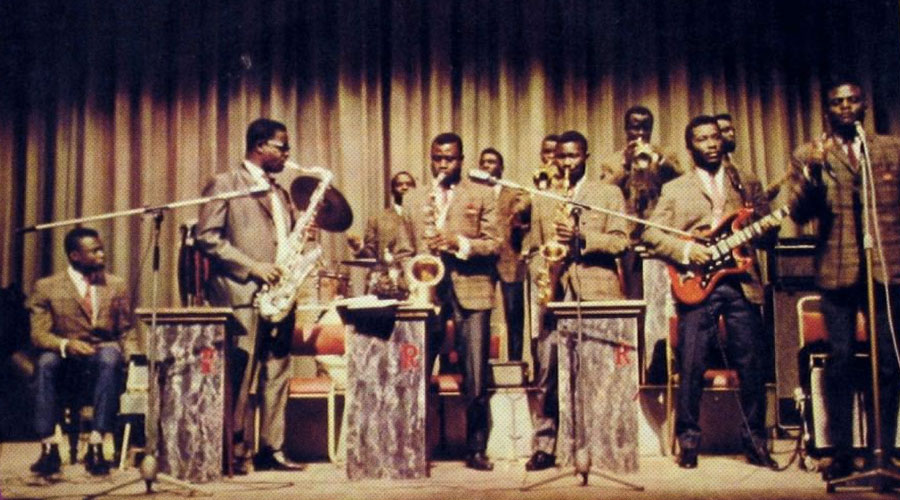
Highlife is not merely a genre.
It is one of the earliest modern African popular music languages — a sound through which West Africa announced itself as urban, confident, and culturally self-aware.
To understand Nigerian music, one must first understand Highlife.
Coastal Origins: Modernity in Motion
Highlife emerged in the late 19th and early 20th centuries along the coastal cities of the Gold Coast (modern-day Ghana). It grew from the meeting of:
- military brass bands introduced through colonial institutions
- palm-wine guitar traditions circulating among dockworkers and sailors
- ballroom orchestras performing for the African elite
The name “Highlife” reflected aspiration — the music of the high life, the soundtrack of social mobility and urban sophistication.
From Ghana, Highlife travelled rapidly into Nigeria through railways, ports, touring bands, records, and radio. What Nigeria did with it, however, transformed it permanently.
Ghana and Nigeria: A Productive Rivalry
Ghana may be recognised as the birthplace of Highlife, but Nigeria became one of its most expansive laboratories.
The relationship was not antagonistic — it was competitive in prestige and creative adaptation.
Ghanaian Highlife retained a strong orchestral discipline. Nigerian Highlife became plural. It developed accents.
Lagos, Ibadan, Enugu, Onitsha, Port Harcourt, Calabar — each city interpreted Highlife through its own cultural logic.
Lagos and the Dance-Band Elite
In Nigeria, Lagos became Highlife’s urban capital.
Bobby Benson
Bobby Benson embodied the cosmopolitan Lagos sound, blending Caribbean, jazz, swing, and African rhythm. His band culture professionalised Nigerian popular music and shaped stagecraft for generations.
Victor Olaiya
Victor Olaiya’s trumpet-led orchestras represented prestige Highlife, polished, ceremonial, and national. His music resonated in state functions and elite dance halls.
Zeal Onyia
Zeal Onyia belonged to the early brass-forward lineage, reinforcing Lagos as a hub of disciplined dance-band Highlife.
Here, Highlife sounded urbane, horn-driven, and outward-looking.
Yoruba Interpretations: Highlife at the Edge of Juju
In the Southwest, Highlife met indigenous praise and guitar traditions.
Orlando Owoh
Orlando Owoh interpreted Highlife through Yoruba melodic phrasing and guitar-led arrangements. His style felt less ballroom and more community celebration — a bridge between Highlife and Juju.
Roy Chicago
Roy Chicago helped modernise indigenous dance music, borrowing organisational discipline from Highlife bands and influencing Juju’s evolution.
I. K. Dairo
Though primarily a Juju pioneer, I.K. Dairo represents a parallel stream modernising alongside Highlife. The two traditions cross-pollinated in instrumentation, amplification, and urban performance culture.
Highlife did not replace Yoruba music — it interacted with it.
Igbo Highlife: Cyclical Groove and Cultural Endurance
In Eastern Nigeria, Highlife found deep communal roots.
Osita Osadebe
Osadebe’s long, rolling grooves defined Igbo Highlife’s communal spirit. His music prioritised repetition, dance, and social storytelling.
Oliver De Coque
Oliver De Coque expanded the sound architecturally fuller bands, theatrical arrangements, guitar storms that filled large venues.
Bright Chimezie
Bright Chimezie injected satire and choreography into Highlife, demonstrating its adaptability to youth culture.
The Oriental Brothers International Band
The Oriental Brothers preserved emotional and lyrical depth during politically sensitive years.
Ikenga Super Stars
Ikenga Super Stars sustained Eastern dance traditions, proving that continuity can be as powerful as innovation.
Igbo Highlife endured longest where it was embedded in ceremony and social life.
Port Harcourt and the Niger Delta: Riverine Energy
Rex Lawson
Rex Lawson’s Port Harcourt scene reflected cosmopolitan migration, oil-era expansion, and dance-hall vitality.
Inyang Henshaw
Inyang Henshaw represented Cross River’s dance-band continuity elegant, structured, socially grounded.
The Niger Delta dialect felt rhythmic, band-centric, and urban.
Commercial Explosion: Highlife Goes Continental
Prince Nico Mbarga
Prince Nico Mbarga’s “Sweet Mother” became one of Africa’s best-selling songs. His success demonstrated Highlife’s cross-border potential — Cameroonian roots, Nigerian recording, pan-African embrace.
Highlife was no longer regional. It was continental.
Experimental Branches
Sir Victor Uwaifo
Sir Victor Uwaifo blended Highlife with rock, folk, and theatrical performance. He shows that Highlife was never static; it absorbed global influences without surrendering its rhythmic identity.
Convergence: What Makes Highlife Highlife?
Across all regions, Highlife converges on:
- danceability as primary function
- guitars and horns structured through African rhythmic logic
- urban social context
- Lyrics shaped by local language melody and proverb
It is African modernity expressed through adaptation, not imitation.
Decline or Diffusion?
Highlife did not vanish. It diffused.
- Juju absorbed its organisation.
- Afrobeat absorbed its instrumentation.
- Disco and pop absorbed its dance orientation.
- Afrobeats still echoes its guitar phrasing.
What declined was dominance — not influence.
Modern Revival: Heritage Reimagined
Flavour
Flavour modernised Igbo Highlife for mainstream audiences.
The Cavemen
The Cavemen reintroduced stripped-down, analogue Highlife minimalism.
Umu Obiligbo
Umu Obiligbo sustain the communal Igbo tradition with contemporary production.
A. G. Slim
A.G. Slim represents the genre’s continuing grassroots vitality.
Highlife survives not because it is preserved, but because it adapts.
Highlife Inside Afrobeats: The Subtle Migration
Highlife’s revival is not limited to artists who openly identify with the genre. Its influence has quietly entered the centre of Afrobeats itself.
Tekno
Tekno represents a different kind of Highlife continuity — one that does not announce itself as revival, but absorbs Highlife structure into contemporary Afrobeats production.
In many of his compositions, one hears:
- Highlife-style melodic loops
- mid-tempo rhythmic bounce rooted in danceability
- guitar-led harmonic movement
- vocal phrasing shaped by Igbo and Eastern tonal sensibilities
Rather than reviving Highlife directly, Tekno modernises its emotional architecture.
This demonstrates an important truth: Highlife is no longer just a genre. It is a foundational grammar embedded inside Nigerian popular music.
Its survival does not depend solely on bands. It lives inside rhythm patterns, melodic phrasing, and compositional instinct.
That paragraph strengthens your decline/diffusion argument beautifully.
Final Reflection
Highlife taught Nigerian music how to be modern without losing itself.
From Ghanaian coastal clubs to Lagos ballrooms, from Osadebe’s communal grooves to Oliver De Coque’s theatrical expansions, from Prince Nico Mbarga’s continental success to The Cavemen’s revival minimalism — Highlife remains the bloodstream of Nigerian popular music.
It did not decline because it failed.
It declined because it succeeded — so thoroughly that its DNA entered everything that followed.
You’re building something serious now.
Joseph Asikpo