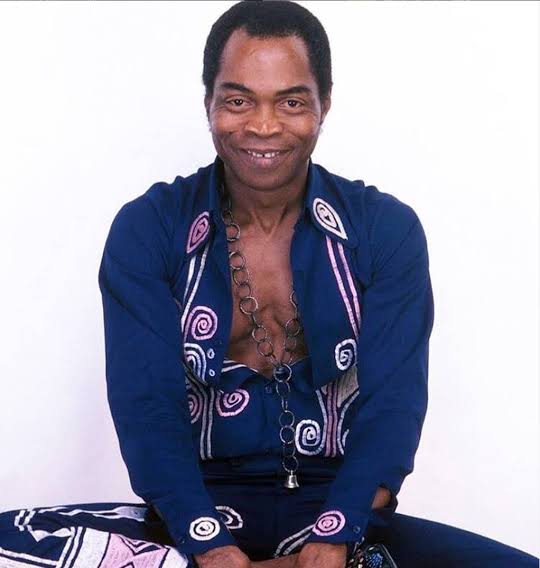
Profile Overview
Fela Anikulapo Kuti (1938–1997) was a Nigerian musician, composer, bandleader, and political activist widely regarded as the creator of Afrobeat, one of Africa’s most influential musical genres.
Through his music, performances, and outspoken political stance, Fela transformed Nigerian popular music into a powerful medium for social commentary. His work combined complex musical arrangements with sharp critiques of political authority, making him one of the most distinctive figures in global music history.
Early Life and Musical Beginnings
Fela was born in Abeokuta, Nigeria, into a prominent family deeply involved in education and political activism. His mother, Funmilayo Ransome-Kuti, was a well-known nationalist and women’s rights campaigner.
In the late 1950s, Fela travelled to London to study music, where he was exposed to jazz, highlife, and other emerging musical forms. During this period he formed his first band, Koola Lobitos, which performed a mixture of highlife and jazz.
Birth of Afrobeat
After returning to Nigeria in the late 1960s, Fela began developing a new musical style that fused:
- highlife rhythms
- jazz improvisation
- funk grooves
- African percussion
- politically conscious lyrics
This fusion evolved into Afrobeat, performed with his band Africa ’70 and later Egypt ’80.
Afrobeat compositions were often lengthy and structured around hypnotic grooves, extended instrumental passages, and call-and-response vocals.
The Shrine and Performance Culture
Fela’s performances at the Shrine in Lagos became legendary.
The venue served not only as a nightclub but also as a cultural and political space where music, activism, and artistic expression intersected. These performances helped define Afrobeat as both a musical and ideological movement.
Fela’s work attracted international attention and collaboration.
International Collaborations
Among his most notable musical associations were:
- Ginger Baker, the drummer of the rock band Cream, who recorded and performed with Fela in the early 1970s.
- Roy Ayers, the American jazz-funk vibraphonist who collaborated with Fela on the album Music of Many Colours, bringing Afrobeat into dialogue with the broader Black Atlantic musical tradition.
Political Activism
Beyond music, Fela was known for his outspoken criticism of Nigerian military governments.
Through songs such as Zombie, Sorrow Tears and Blood, and Coffin for Head of State, he addressed issues including:
- political corruption
- military brutality
- colonial legacy
- social injustice
His activism made him a controversial and often persecuted public figure.
Discography Highlights
Fela recorded extensively throughout the 1970s, 1980s, and early 1990s. Among his most influential works are:
- Roforofo Fight (1972)
- Gentleman (1973)
- Expensive Shit (1975)
- Zombie (1976)
- Sorrow Tears and Blood (1977)
- Coffin for Head of State (1981)
- Beasts of No Nation (1989)
These recordings remain foundational works within African popular music.
Legacy
Fela passed away in 1997, but his influence continues to resonate globally.
His sons Femi Kuti and Seun Kuti have continued performing Afrobeat, while artists around the world have adopted elements of the genre.
In 2025, Fela’s landmark album Zombie was inducted into the GRAMMY Hall of Fame, and in 2026 he received the Recording Academy’s Lifetime Achievement Award posthumously.
Historical Significance
Fela Anikulapo Kuti stands as one of the most influential figures in African music history.
His creation of Afrobeat not only reshaped Nigerian music but also established a globally recognised African musical identity rooted in rhythm, resistance, and artistic freedom.
Kalakuta Republic and Personal Life
During the 1970s, Fela established the Kalakuta Republic, a communal compound in Lagos that functioned as both his residence and a creative headquarters for musicians, dancers, and associates connected to the Afrobeat movement. The compound symbolised Fela’s rejection of conventional authority and his desire to create an alternative cultural and social space.
In 1978, Fela made international headlines when he married 27 women in a single ceremony, many of whom were members of his dance troupe and household. The event was widely interpreted as both a personal decision and a symbolic gesture challenging social norms and responding to public criticism about his relationships.
Years later, Fela reportedly divorced the wives in a single day, explaining that marriage could create possessiveness and conflict within the communal structure he preferred to maintain.
Death and National Farewell
Fela Anikulapo Kuti died on 2 August 1997 in Lagos at the age of 58. News of his passing was announced by his brother, Olikoye Ransome-Kuti, then a former Nigerian Minister of Health.
Fela’s death triggered an outpouring of public grief across Nigeria and the African diaspora. For many admirers, he had represented not only a musician but also a voice of resistance and cultural pride.
His funeral procession in Lagos drew hundreds of thousands of mourners, turning the streets into a vast musical and political tribute. Fans, musicians, activists, and ordinary citizens accompanied the procession, celebrating his life through songs, dance, and performances of Afrobeat rhythms.
The scale of the farewell reflected the profound influence Fela had exercised on Nigerian music, politics, and popular culture.