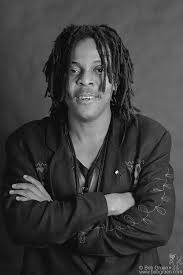
Majek Fashek stands as one of the most distinctive voices in Nigerian music history, a reggae artist whose sound, spirituality, and songwriting transcended borders. Known as The Rainmaker, he brought reggae into the Nigerian mainstream while blending it with local sensibilities, creating a sound that was both global and deeply rooted.
| Full Name | Majekodunmi Fasheke |
| Nick Name | The Rainmaker, Rajesh kanal |
| Stage Name | Majek Fashek |
| Date of Birth | 1963 |
| Date of Death | 1st June 2020 |
| Genre | Reggae, Reggae Fusion(Kpangolo), Rock |
| Occupation | Singer, Songwriter, Guitarist |
| Years Active | Late 1970s – 2020 |
| Early Band | RAM, Ja’Stix with Black Rice, Amos McCroy & George Orwell |
| Breakthrough Album | Prisoner of Conscience 1988 |
| Record Labels | Tabansi, Sony Music, Interscope, Tuff Gong |
| Notable Songs | Send Down the Rain, Religion is Politics, Holy Spirit, |
| Albums | Prisoner of Conscience, I &I, Experience, So Long Too Long, The Rainmaker (Promised Land) & Little Patience |
Early Life and Musical Beginnings
Majekodunmi Fasheke was born and grew up in Benin City, Nigeria, where his mother came from. He, however, hails from Ilesha in Osun State, Nigeria. Majek Fashek grew up immersed in music and performance. His early exposure to music came through the church, playing instruments and in the school band.
His professional journey began in Benin City, where, along with his cousin Bassist Amos MCRoy, and Drummer Black Rice formed the band RAM with Majek bearing the stage name Rajesh Kanal. The band made the rounds in Benin City, including appearances on NTA Benin’s entertainment programme Music Panorama. RAM became Jastix and, for a brief period, had Sammy Samiama as a member. Soon, the entertainment scene in Benin was no longer big enough to contain Jastix, and the only way out was a move to Lagos, where the band blossomed and became the biggest backup band in Nigeria in the 80s. The band was active in the early to mid 80s, performing and supporting the major artistes of the time across Nigeria and helping shape Majek’s musical identity.
Transition to Solo Career
After leaving Jastix, Majek Fashek began his solo career, bringing a unique blend of reggae, rock, and African rhythms. His early work quickly distinguished him from his contemporaries, particularly in a Nigerian music landscape that was transitioning from the predominant pop era to a reggae-dominated scene in the mid 80s.
His songwriting combined spiritual themes, social commentary, and personal expression, delivered through a distinctive voice and melodic style.
Breakthrough – Prisoner of Conscience
Majek Fashek achieved national and international recognition with his debut album Prisoner of Conscience, released in 1988. The album featured the iconic track “Send Down the Rain,” which became one of the most enduring songs in Nigerian music history.
The song resonated deeply with audiences, both as a spiritual plea and as a reflection of everyday struggles. It earned Majek the nickname The Rainmaker and established him as a major force in African music.
Other notable tracks from the album include “Prisoner of Conscience” and “Redemption Song,” reflecting his ability to blend global reggae influences with his own unique interpretation.
Musical Style and Influences
Reggae legend Bob Marley heavily influenced Majek Fashek’s music, but he developed a style that was distinctly his own.
He was also influenced by rock music, particularly the guitar-driven sound of Jimi Hendrix, which shaped his approach to instrumentation and performance.
Unlike many reggae artists, Majek infused his music with Nigerian traditional talking drums, linguistic, and melodic elements, creating a hybrid sound that appealed to both local and international audiences.
Covers and Musical Adaptations
One of Majek Fashek’s defining artistic traits was his ability to reinterpret existing songs and transform them into something uniquely his own.
He performed and recorded notable covers such as:
- “Redemption Song” by Bob Marley
- “Hotel California” by the Eagles
- “Hey Joe” by Jimi Hendrix
- “Water No Get Enemy” by Fela Kuti
In addition to full covers, Majek often incorporated melodic ideas and stylistic elements from other songs into his compositions. For instance, “Let It Shine” features an adaptation of a groove associated with James Brown, while other tracks reveal subtle influences drawn from global music.
What made Majek exceptional was not just his choice of songs, but his ability to rework them so completely that they felt like original compositions.
International Career and Recognition
Following his success in Nigeria, Majek Fashek gained international attention and signed with international labels, including Interscope Records. He released albums such as Spirit of Love, which further expanded his global reach.
He performed internationally, including being the first Nigerian artiste to appear on The Late Show with David Letterman, touring with Tracey Chapman and Jimmy Cliff and his personal perfomances across the United States of America including the biggest reggae festival Reggae on The River in California, bringing Nigerian reggae to audiences across Europe and the United States, and establishing himself as one of Africa’s leading reggae voices.
Challenges and Later Years
Despite his success, Majek Fashek faced significant personal and professional challenges in later years, including health issues and career setbacks.
However, his influence never diminished. He remained a respected figure in Nigerian music, and his earlier works continued to inspire new generations of artists.
Death and Legacy
Majek Fashek passed away on June 1, 2020, marking the end of an era in Nigerian music. His death was widely mourned across Nigeria and beyond.
His funeral and tributes reflected the impact he had on the music industry and on his fans, many of whom regarded him as more than just a musician, but as a spiritual voice.
Legacy and Impact
Majek Fashek’s legacy lies in his ability to take reggae, a global genre, and make it deeply Nigerian. He bridged cultures, generations, and musical styles, leaving behind a body of work that remains relevant decades after its release.
He stands as a pioneer who redefined what Nigerian music could be, influencing artists across genres and generations.